admin
admin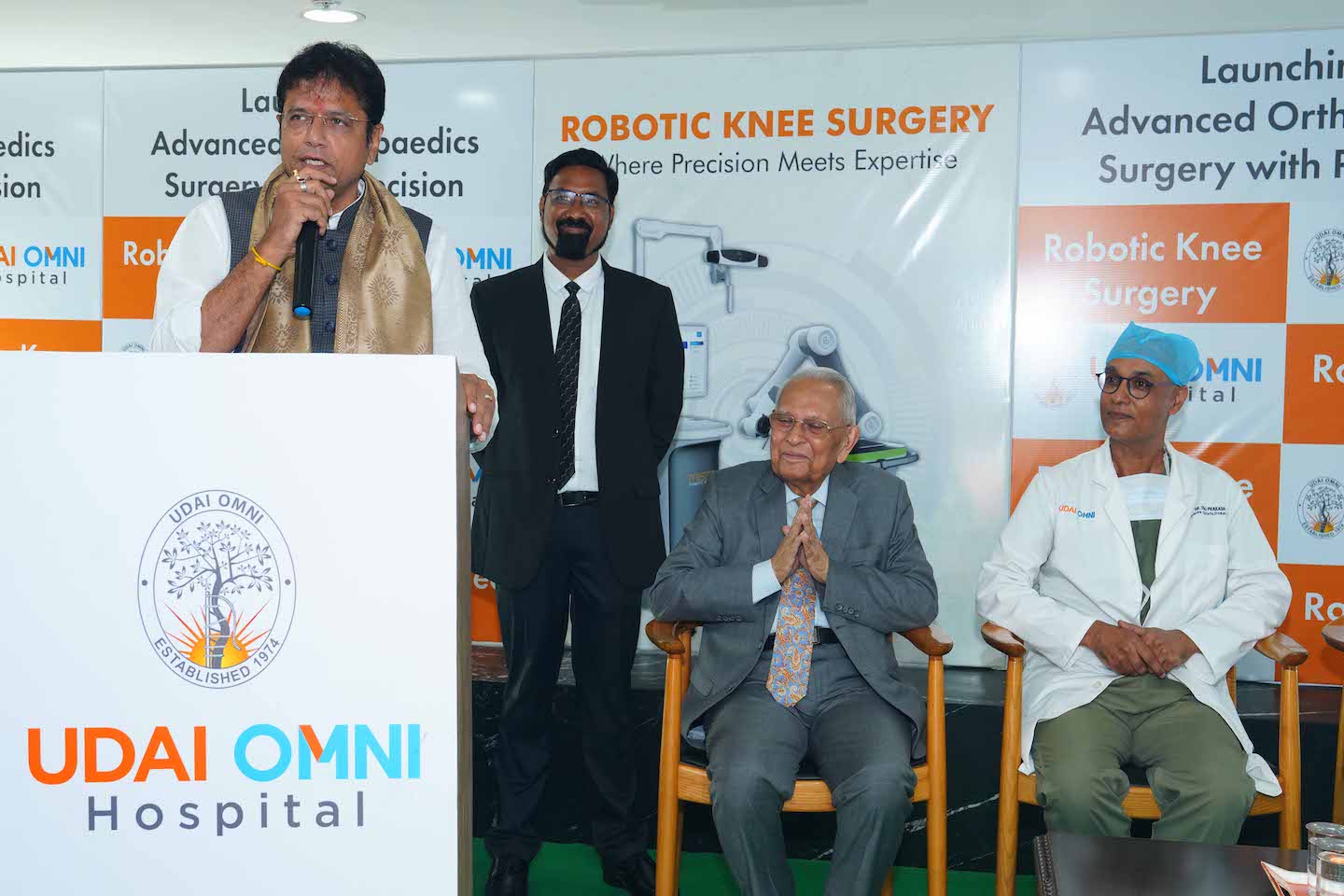
Udai Omni Hospital pioneers Advanced Robot-Assisted Joint Replacement Surgery!
India
healthysoch
Hyderabad/New Delhi, August 12, 2025:
Udai Omni Hospital, a 50 year old renowned centre of excellence in orthopaedics and trauma care in South India, unveiled its ultra-modern surgical robot.
The advanced Misso robotic system was inaugurated by D. Sridhar Babu, Hon’ble Minister for Information Technology & Industries, Government of Telangana. in the presence of senior consultants, patients, and distinguished guests, at the hospital premises at Chapel Road, today.
The robotic joint replacement unit is led by Dr Udai Prakash FRCS (Tr & Orth) UK, Chief of Joint Replacement Surgery, a veteran with over three decades of surgical expertise and thousands of successful knee and hip replacements to his credit.
D. Sridhar Babu added, “Udai Omni Hospital continues to lead the way in bringing world-class healthcare innovations to Telangana. The launch of robotic surgery here will benefit countless patients and raise the standard of orthopaedic care in the region. Technology has become a powerful catalyst for positive change in human lives, ushering us into a new era of medical excellence. With the advent of cutting-edge innovations, the transformation in healthcare is nothing short of remarkable. Picture the joy of patients who, thanks to advanced medical technology, recover swiftly and are spared prolonged post-surgery trauma, a life-changing difference made possible in the skilled hands of a doctor. Globally, robotic surgeries are on a steep growth trajectory, expanding at 15% annually, with the market expected to soar to $18 billion by 2030.
Dr Udai Prakash highlights, “Robotic knee replacement – offers enhanced precision for implant placement and bone cuts, minimizing errors and improving fit. Allows better gap balancing, personalised alignment and a more natural- feeling joint. This minimally invasive approach results in less tissue damage, reduced pain, faster recovery and lower infection rate. The system provides real-time feedback, reducing human error. Patients experience faster healing, reduced swelling, quicker return to normal activities. Studies suggest improved implant longevity due to better alignment and fixation.”
This precision driven procedure involves a detailed 3D CT scan, creation of an exact bone and joint model, computer-assisted surgical planning, integration of the model into the robotic system, incision and bone registration, real-time gap balancing, and bone cutting with absolute accuracy, all with relatively less tissue disturbance to ensure speedy patient recovery.