Healthy Soch
Bai Jerbai Wadia Hospital for Children performs its first heart transplant on a teenager with dilated cardiomyopathy and severe heart failure. A green corridor brings the donor heart 23.9 km from Mulund in approximately 25 minutes
India
healthysoch
Mumbai/New Delhi, October 23, 2026:
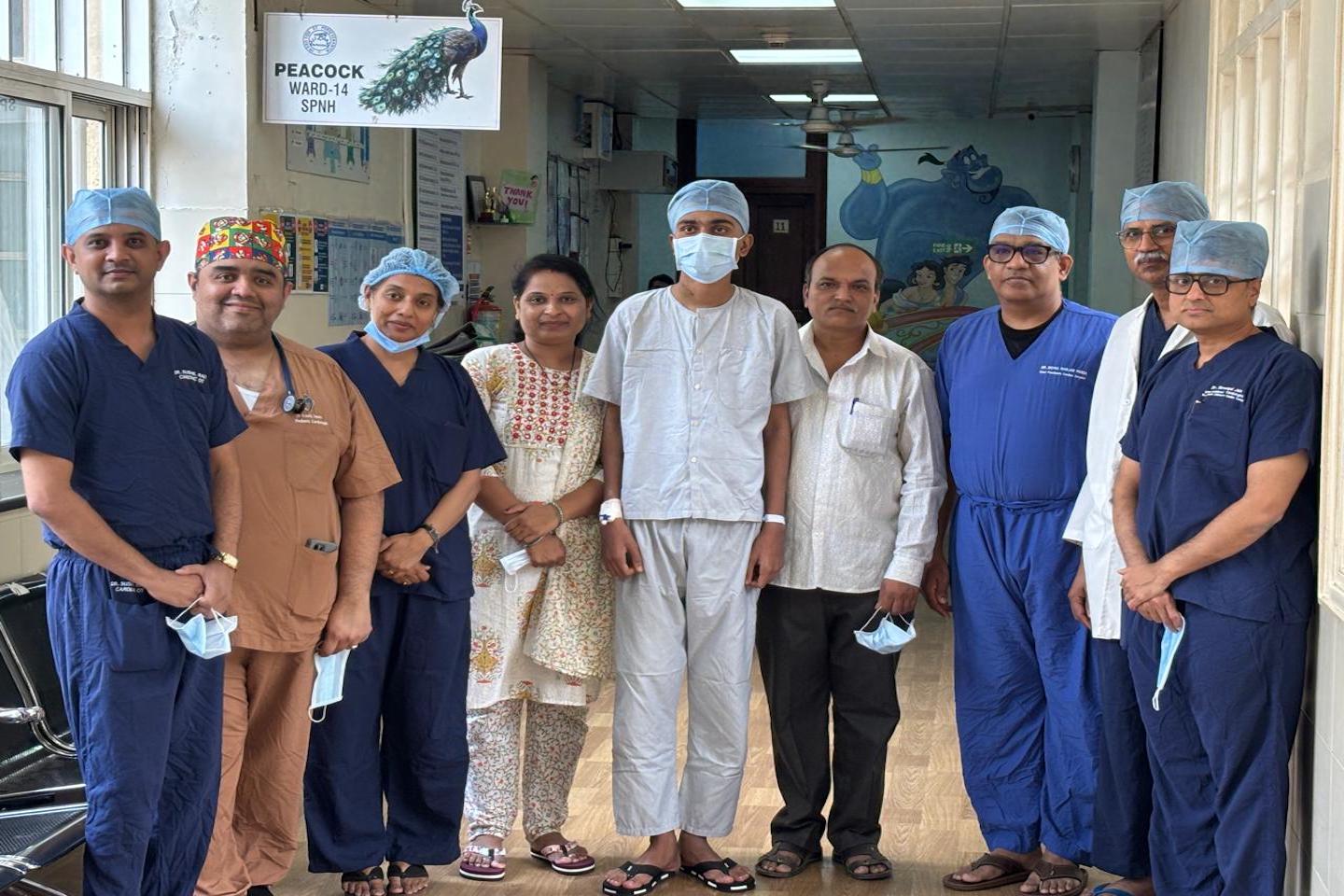
In a landmark achievement for paediatric cardiac care, Bai Jerbai Wadia Hospital for Children, Mumbai, has successfully performed its first heart transplant, making it the first public children’s hospital in Mumbai to achieve this milestone. The life-saving procedure was performed by a team led by Dr Biswa Panda, Paediatric Cardiac Surgeon, on a 17-year-old boy with dilated cardiomyopathy and severe heart failure. A green corridor enabled the donor heart to be transported 23.9 km from Fortis Hospital, Mulund, to Wadia Hospital in approximately 25 minutes.
Tanmay Shinde, a resident of Ghansoli, Navi Mumbai, was diagnosed with dilated cardiomyopathy at a hospital in Vashi on December 1 and discharged after five days. However, within a week, he developed breathlessness, chest pain, and fatigue, and his condition began to deteriorate. He was initially taken back to the same hospital before being shifted to Bai Jerbai Wadia Hospital for Children on December 15 in a critical condition. He was placed under the care of Dr Biswa Panda for further evaluation and specialised cardiac treatment.
Dr Biswa Panda, Paediatric Cardiac Surgeon, Bai Jerbai Wadia Hospital for Children, said, “Tanmay was diagnosed with dilated cardiomyopathy, a condition in which the heart muscle enlarges and weakens, reducing its ability to pump blood effectively and leading to heart failure. A normal heart has an ejection fraction (EF) of approximately 55–65%, indicating its pumping capacity. Tanmay’s EF remained around 25–30% for some time before dropping to critically low levels of 10–15%. Although intensive treatment and medication temporarily improved his heart function to 20–25. He was admitted to Bai Jerbai Wadia Hospital for Children on December 15 and discharged on January 28. However, his condition remained fragile even after discharge, necessitating frequent hospital visits and readmissions for continued treatment and monitoring.”
Tanmay’s heart function remained severely compromised, making transplantation the best available treatment option. Around six months ago, the medical team counselled him and his family about the need for a heart transplant. His name was subsequently registered on the transplant waiting list through the Zonal Transplant Coordination Centre (ZTCC), as the family waited for a suitable donor heart.
Finding a compatible heart was crucial. The donor’s blood group, age, weight, and body surface area had to be assessed against Tanmay’s requirements to ensure the best possible match. Suitable donor hearts are particularly difficult to find for children and adolescents, making timely organ allocation essential.
The breakthrough came on October 6, when the team received information about a potential donor heart at Fortis Hospital, Mulund. The heart belonged to a 22-year-old brain-dead male donor whose family consented to organ donation, offering Tanmay a chance at life. Following compatibility assessments and the applicable ZTCC organ allocation process, the heart was allocated to him.
Explaining the time-sensitive procedure, Dr Panda said, “A heart transplant requires precise coordination because the donor heart must be transplanted within a limited period after retrieval. Once removed from the donor’s body, it must be preserved and transported promptly, as delays can affect its functioning. In Tanmay’s case, a green corridor facilitated transportation from Fortis Hospital, Mulund, to Wadia Hospital. The distance was approximately 23.9 km, and the heart reached us in around 25 minutes.”
While the donor heart was being retrieved and transported, the recipient team prepared Tanmay for surgery. Dr Biswa Panda added, “The donor and recipient teams worked in parallel so that the operation could proceed as soon as the heart arrived. During the transplant, the major blood vessels and structures, including the aorta, pulmonary artery, left atrium, and superior and inferior vena cava, were connected before the transplanted heart began beating normally. The total time from when the donor’s heart stopped beating to when the transplanted heart began beating in Tanmay was approximately three hours. His condition had deteriorated significantly, and without timely treatment, he was at risk of developing multi-organ failure. The successful outcome highlights the importance of timely organ allocation, coordinated transport, and specialised paediatric cardiac care.”
Following surgery, Tanmay was shifted to the ICU for close monitoring, where he remained for seven days. As his condition improved, his treatment and medication were adjusted. He gradually resumed eating, walking, and other basic activities and began cardiac rehabilitation and physiotherapy. He has now been shifted to the hospital ward.
Tanmay has not yet been discharged. The medical team plans to conduct a biopsy to assess whether his body is accepting the transplanted heart and will adjust his medication as required. He will need lifelong immunosuppressive medication to reduce the risk of organ rejection, regular medical follow-ups, and precautions against infections, including isolation when medically necessary.
For Tanmay’s family, the transplant represents a chance to look beyond months of uncertainty and repeated hospital visits. His father, Ashok Shinde, works as a bus conductor, while his mother, Sujata, is a housewife. Given the family’s limited financial means, the cost of the life-saving transplant was met through crowdfunding, helping them access the treatment their son urgently needed.
Tanmay’s parents said, “Tanmay was studying in Class 12 at a college in Navi Mumbai when he was diagnosed with dilated cardiomyopathy. His illness made it difficult for him to attend college, and he could not appear for his examinations. The diagnosis came as a huge shock to our family, and we were worried about his health and future. We are grateful to the donor family for giving our son a second chance at life. We also thank Dr Biswa Panda and the entire team at Bai Jerbai Wadia Hospital for Children for their timely intervention and dedicated care. Tanmay is now recovering, and we hope he can appear for his Class 12 examinations next year and continue his education.”
Highlighting the need for paediatric organ donation, Dr Biswa Panda said, “Heart transplantation is an established treatment for adults, but it remains far less common in children. One of the biggest challenges is the shortage of suitable donor hearts. Children with severe heart failure may remain on waiting lists because finding a heart that matches their size and medical requirements can be difficult. Greater awareness of organ donation, including the possibility of paediatric donation, can help more children receive transplants when they need them. Every suitable donation can offer a child and their family the possibility of a future that might otherwise have been lost.”
Wadia Hospital currently provides care to approximately 300 children with heart failure through its dedicated heart failure clinic. Through early identification, ongoing monitoring and timely referral for advanced treatment, the hospital aims to help children who may eventually require a transplant access appropriate care. Greater public awareness and support for paediatric organ donation remain essential to improving opportunities for children awaiting life-saving transplants.
“The successful heart transplant marks an important milestone in Bai Jerbai Wadia Hospital for Children’s efforts to strengthen specialised paediatric care. Our organ transplant programme, which includes liver and kidney transplants, continues to evolve to meet the complex medical needs of children, and the addition of heart transplantation is a significant step in this journey. Preparing for such a complex procedure requires meticulous planning, specialised expertise and seamless coordination at every stage, from donor organ allocation and transportation to post-transplant care. This achievement reflects the commitment of our medical teams to providing children with access to advanced treatment for serious and life-threatening conditions. We hope it will also encourage greater awareness of paediatric organ donation and inspire more families to consider donation, giving children awaiting transplants a chance at a healthier future,” concluded Dr Minnie Bodhanwala, CEO, Bai Jerbai Wadia Hospital for Children.