Healthy Soch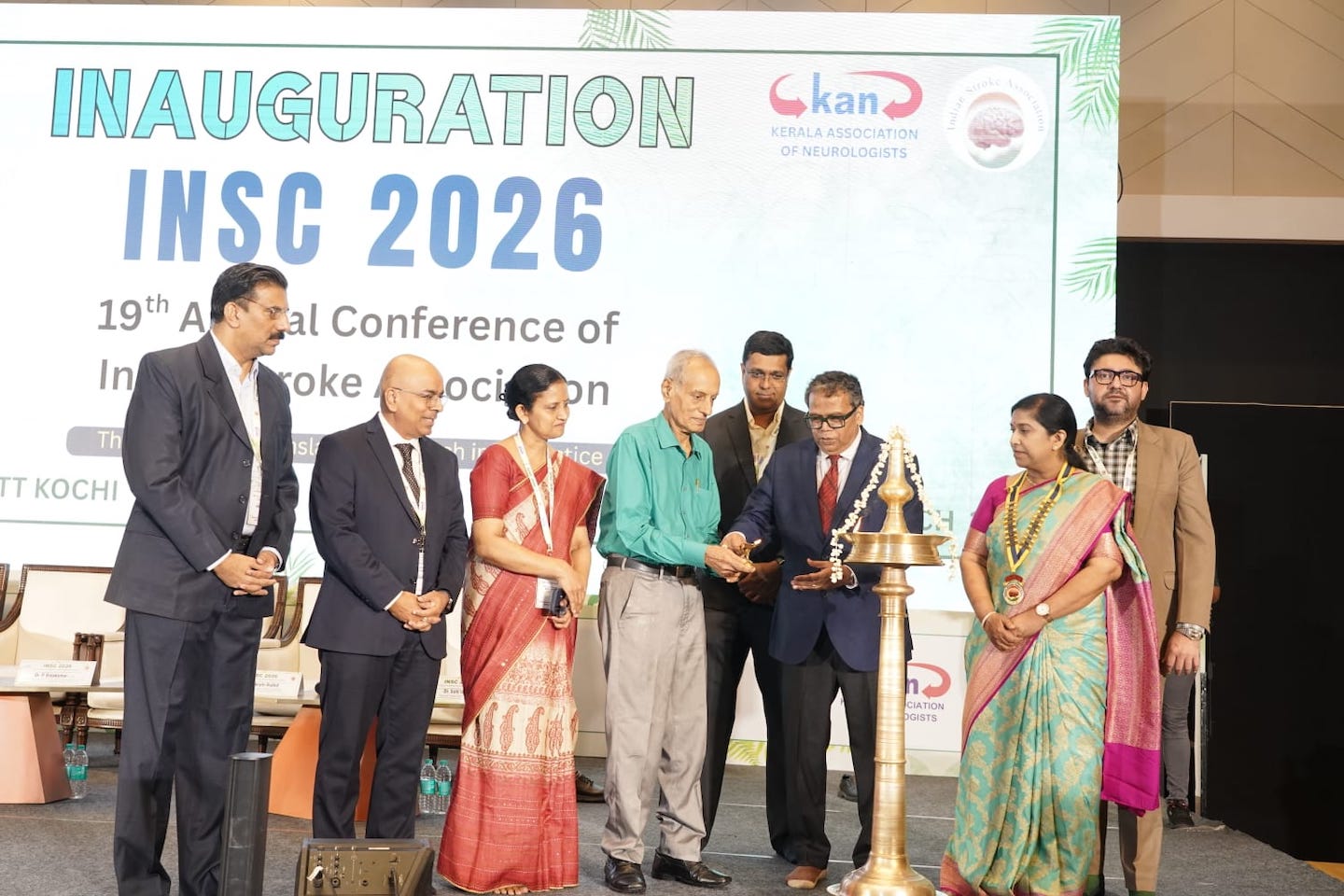
National Stroke Conference INSC 2026 Concludes in Kochi. Leading national and international stroke experts discussed the latest advances in stroke care, prevention, and treatment
Kochi /New Delhi, March 14, 2026
The main conference from 13–15 March featured keynote lectures, plenary sessions, panel discussions, and interactive scientific sessions focusing on the latest research, emerging therapies, and advances in stroke care. Special sessions for young stroke neurologists, pediatric neurology specialists, and physicians encouraged collaboration and knowledge sharing among professionals from different disciplines.
Loknath Behera, IPS, Managing Director, Kochi Metro Rail Pvt. Ltd., attended INSC 2026 as the Chief Guest. Dr. P. Sreekumar, Senior Consultant Neurosurgeon, Founder Executive Trustee, Vidyodaya School , Kochi graced the occasion as the Guest of Honour.
The Organising Committee for INSC 2026 was led by Dr. P.N. Sylaja (Organising Chairman) and Dr. V.G. Pradeep Kumar (Organising Secretary). The Executive Committee of the Indian Stroke Association (ISA) included Dr. P. Vijaya (President) and Dr. Arvind Sharma (Secretary).
Dr. P. Vijaya, President of ISA, said: “INSC 2026 has been carefully designed to bridge the gap between cutting-edge research and real-world clinical practice in stroke care. As stroke cases continue to rise in India, it is crucial for healthcare professionals to stay updated with the latest treatment protocols, technologies, and evidence-based approaches. Through focused workshops, scientific sessions, and expert-led discussions, the conference enabled clinicians to gain practical insights into advanced stroke therapies, early intervention strategies, and improved rehabilitation methods. Our aim is to empower doctors and healthcare teams to deliver faster, more effective treatment and ultimately improve survival rates and recovery outcomes for stroke patients across the country.”
Dr. Arvind Sharma, Secretary of ISA, added: “INSC 2026 served as an important platform for neurologists, physicians, researchers, and allied healthcare professionals to come together and exchange knowledge on the evolving landscape of stroke management. Stroke care requires strong collaboration between multiple specialties, from emergency response and intervention to rehabilitation and long-term patient support. This conference encouraged meaningful discussions on complex clinical cases, emerging research, and innovative treatment approaches. By fostering collaboration and learning from global experts, we aim to strengthen stroke care systems, promote early diagnosis and prevention, and ensure better treatment accessibility for patients across India.”
—