Healthy Soch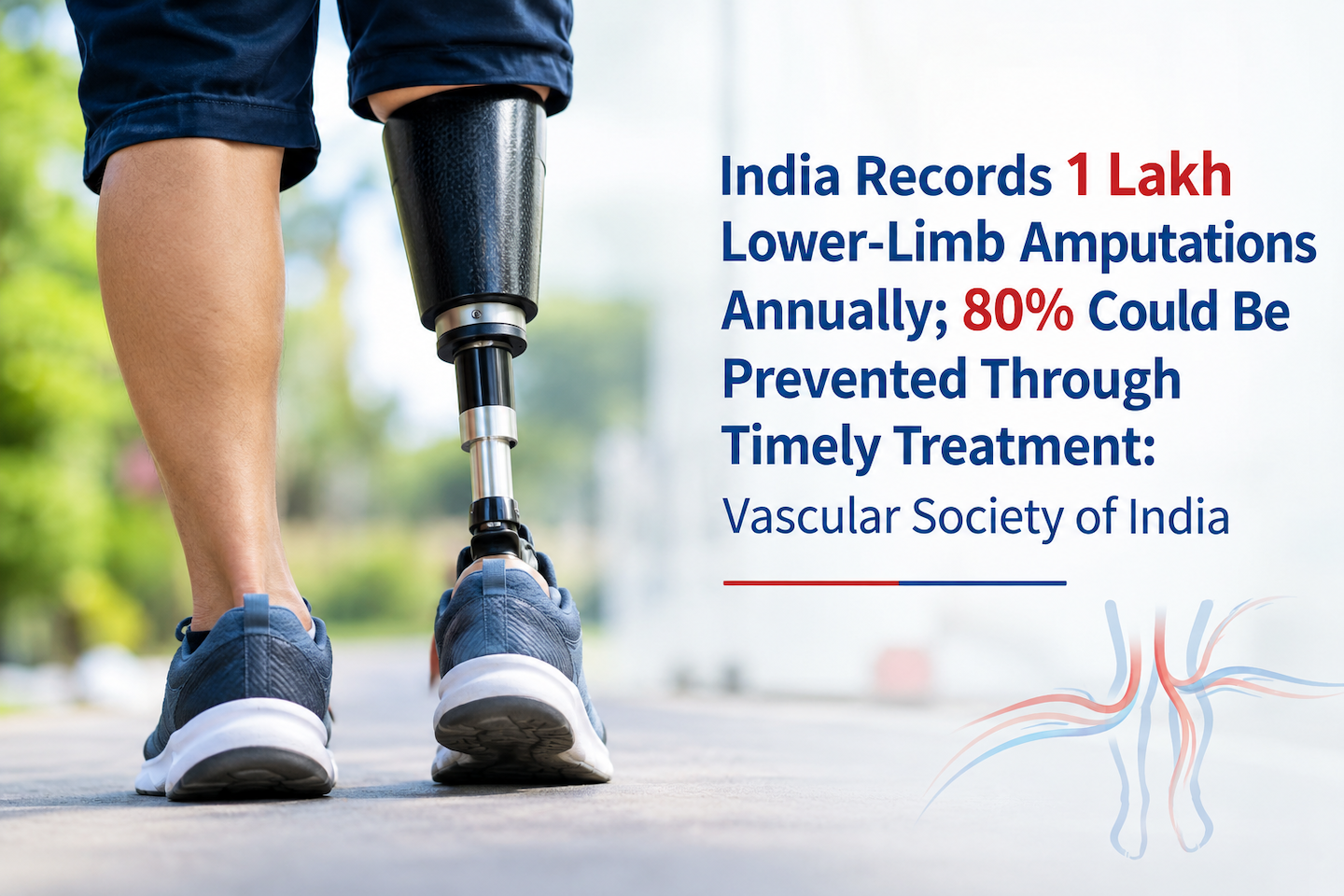
India faces a massive limb-loss challenge as diabetes and vascular disease fuel foot ulcers, infections and critical limb-threatening ischaemia
India
healthysoch
New Delhi, October 11, 2026:
India must urgently strengthen early detection and timely treatment of diabetic foot disease and peripheral vascular disease to prevent avoidable lower-limb amputations, leading vascular specialists warned at VSI-ASVS 2026 International conference , which was held from October 8 to 10, 2026, at Hotel Pullman and Novotel, Aerocity, New Delhi, it brought more than 400 faculty members and over 1,000 delegates from India and abroad to discuss advances and emerging challenges in vascular and endovascular surgery.
The warning comes against the backdrop of India’s enormous diabetes burden. The landmark ICMR-INDIAB national study, published in The Lancet Diabetes & Endocrinology, estimated that 101 million Indians were living with diabetes and another 136 million with prediabetes, based on nationally representative data from 31 states and union territories. This creates a huge population at risk of diabetes-related foot complications, particularly when diabetes is accompanied by peripheral arterial disease, neuropathy, infection or delayed wound healing.
Dr. Tapish Sahu, Organising Secretary, VSI-ASVS 2026 and Director & Head of the Department of Vascular & Endovascular Surgery at Max Hospital, New Delhi, said, “An amputation should not be viewed simply as a surgical procedure; it is often the endpoint of a missed opportunity. 80% of Lower-Limb Amputations Can Be Prevented by Timely Treatment A small wound in a person with diabetes can become a limb-threatening problem when neuropathy, infection and poor circulation are not recognised early. Our message at VSI-ASVS 2026 is clear: every diabetic foot needs a vascular assessment when there is suspicion of poor blood flow, and timely intervention can mean the difference between saving a limb and losing it.”
According to vascular experts, lower-limb amputation is rarely a sudden event. It is often the final stage of a chain that can begin with an apparently minor cut, blister, pressure injury or foot ulcer, followed by infection, poor blood circulation and tissue loss. Diabetes-related nerve damage can reduce sensation, while peripheral arterial disease can restrict blood flow and oxygen delivery to the foot, making wounds more difficult to heal. The combination can rapidly progress to gangrene, chronic limb-threatening ischaemia and, ultimately, amputation.
Dr. Tarun Grover, Organising Chairman, VSI-ASVS 2026 and Senior Director of Peripheral Vascular and Endovascular Sciences at Medanta, said, “The real challenge is not only performing advanced vascular procedures; it is identifying the patient before the disease reaches an irreversible stage. When a diabetic patient develops a non-healing wound, colour change, increasing pain, coldness of the foot or tissue loss, we cannot afford to wait. Modern vascular and endovascular techniques can restore blood flow in appropriately selected patients and create an opportunity for wounds to heal and limbs to be preserved.”
In India, the concern is particularly significant because of the sheer number of people living with diabetes. An earlier multicentric Indian study involving 1,985 people with type 2 diabetes across 31 centres found that infection was present in almost 90% of patients who underwent amputation, while 70.9% of amputations were minor and 29.1% major. More than half of major amputations were below-knee procedures.
Experts emphasised that prevention requires patients, diabetologists, primary-care physicians, wound-care teams and vascular specialists to work together. Regular foot examination, blood-sugar control, early treatment of wounds and infections, smoking cessation, appropriate footwear and timely assessment of arterial circulation can all play a role in reducing the risk of limb loss.
Dr. Bhupesh Garg, Senior Vascular & Endovascular Surgeon, Vascular Society of India, said, “We need to change the mindset from amputation management to limb preservation. The 80% prevention message is about acting before irreversible tissue loss occurs. A patient with diabetes should never ignore a wound, blackening of a toe, persistent swelling, discharge, unexplained foot pain or a foot that suddenly becomes cold. Early referral to a multidisciplinary diabetic-foot and vascular team can dramatically change the trajectory of the disease.”
The evidence for early intervention is compelling. A recent prospective study presented in 2025 found that the development of a diabetic foot ulcer was a powerful independent predictor of lower-extremity amputation, with incident ulcers associated with more than a 10-fold higher risk of amputation in the study population.
The consequences of amputation extend far beyond the loss of a limb. It can affect mobility, independence, employment, psychological wellbeing and quality of life, while also placing a considerable burden on families and healthcare systems. Contemporary evidence also shows that major lower-limb amputation is associated with substantial long-term mortality; a recent systematic review and meta-analysis estimated mortality of 28.9% at one year and 63% at five years after major lower-limb amputation for peripheral arterial disease or diabetes.
The Vascular Society of India stressed that timely treatment does not mean one particular procedure for every patient. Depending on the cause and severity, treatment may involve infection control, wound care, pressure off-loading, optimisation of diabetes and cardiovascular risk factors, medicines, angioplasty or stenting, bypass surgery, or a combination of approaches.
The Society also called for greater public awareness that “waiting for the wound to heal on its own” can be dangerous, particularly among people with long-standing diabetes, kidney disease, smoking history or known vascular disease.
With India carrying one of the world’s largest diabetes populations, vascular specialists said the country has an opportunity to significantly reduce preventable limb loss by moving from late-stage emergency care to early screening, rapid referral and coordinated limb-preservation pathways.