Healthy Soch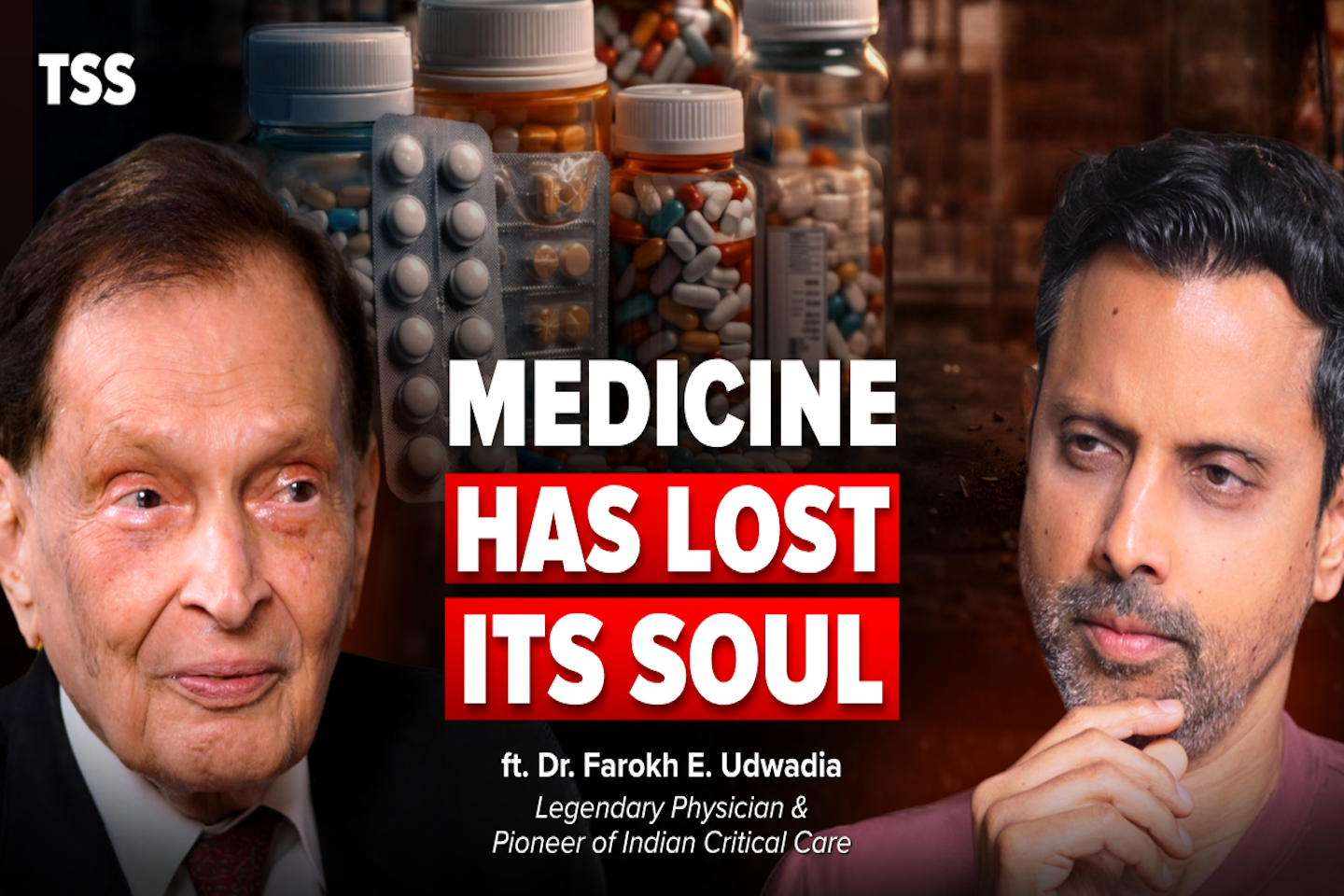
A legendary Indian physician makes the case for restoring the human
touch in clinical practice.
India
healthysoch
New Delhi, April 17, 2026:
Indian medicine has never been better equipped. In major cities, patients now walk into
consulting rooms with imaging reports and blood panels in hand before they have described
a single symptom. Multispecialty hospitals compete on the sophistication of their machines,
including genomic panels, AI diagnostics, and robotic surgery that are increasingly part of
routine care. By any measure of infrastructure, the Indian medical profession has caught up
with the world’s best.
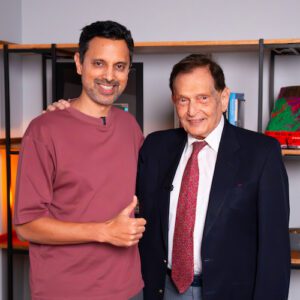
However, in a recent podcast conversation with host Mukul Deora, one of the country’s most legendary doctors offered an unsparing verdict on where all this progress has led. Dr. Farokh Udwadia – Padma Bhushan awardee, pioneer of critical care medicine in India, and
Consultant Physician at Breach Candy Hospital since 1964 – argued that medicine, in its
pursuit of science, has quietly submerged its art. “Medicine has lost its path,” he said.
“If there is one man who has seen it all, it’s Dr Farokh Udwadia. The 94-year-old legendary physician sat down with me to explain why he believes the medical system is broken today, what makes a life worth living, and how to sustain curiosity over a lifetime. He also shares his view on the deeper link between health, happiness, and continuous learning. This is the reason I started this podcast.” – Mukul Deora.
Art Submerged by Science
Dr. Udwadia traces the drift to what he calls the mechanisation of medicine: the hubris of
science and technology that has placed machines as the intermediary between doctor and
patient. Technology itself is not the problem, he is careful to note. The problem is that it
begins to replace the doctor’s own senses, judgment, and the relationship the doctor has
with the patient in front of him.
He invoked Sir William Osler, widely regarded as the father of modern medicine, who once
described the practice as an art based on science, composed, in Osler’s words, of the
uncertainty of science and the probability of art. Dr. Udwadia dwells deliberately on the
phrase “uncertainty of science”. Scientific fact in medicine, he points out, is often revised or
overturned within a few years. The march of medicine, he says, is a chronicle of change.
The Symptom and the Story
The clearest case against over-reliance on technology, in his view, is that the report often
tells the wrong story. He recounts a young woman brought to him by her employer for
unexplained seizures. A conversation, not a scan, revealed the cause: she felt she could not
marry because she was the sole financial support for her parents. Once the employer helped
restructure her circumstances, the seizures stopped. She had been unable, Dr. Udwadia
says, to tell anyone what was killing her inside.
He recounts another patient, sent to him by a cardiologist who had advised an angiogram for persistent chest pain. On taking her history, Dr. Udwadia found that the pain had begun the month her father died. It was grief, not cardiac disease. Twenty tests would likely have been ordered before anyone thought to ask.
A third case involved a young woman who had not slept for six weeks. Psychiatrists had
prescribed medication; she had stopped taking it. Dr. Udwadia prescribed Mozart’s clarinet
concerto, a piece that had, he told her, shown an effect in people struggling with anxiety and sleep. She returned three weeks later, sleeping.
Why Empathy Cannot Be Scripted
Medical schools in the United Kingdom, Dr. Udwadia notes, have begun teaching empathy
as part of the curriculum. He is dismissive of the idea. Empathy, in his view, cannot be
installed by instruction. A really ill patient, he says, has antennae and will distinguish
immediately between a doctor who is genuinely concerned and one who is going through the motions.
The broader prescription, he argues, is for doctors to cultivate themselves as human beings
before they cultivate themselves as specialists. A knowledge of the humanities, literature,
poetry, philosophy, and history makes a better physician, because all of them, like medicine, are ultimately the study of man.
A Profession at a Turning Point
Dr. Udwadia’s worry, delivered without drama, is that the human touch will continue to
recede as Indian medicine advances further into technology. The machine, he fears, will not
only mediate the consultation; it will come to command more of the patient’s trust than the
doctor himself.
His hope rests in the next generation. Medicine, he reminds them, is an altruistic profession. The patient comes first. And the art, for all that it resists measurement, remains the part of the work that no machine can replicate.